
1. Which of the following numbers are not perfect cubes?
(i) 216
Solution:
By resolving 216 into a prime factor,
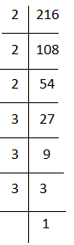
216 = 2×2×2×3×3×3
By grouping the factors in triplets of equal factors, 216 = (2×2×2)×(3×3×3)
Here, 216 can be grouped into triplets of equal factors,
∴ 216 = (2×3) = 6
Hence, 216 is the cube of 6.
(ii) 128
Solution:
By resolving 128 into a prime factor,

128 = 2×2×2×2×2×2×2
By grouping the factors in triplets of equal factors, 128 = (2×2×2)×(2×2×2)×2
Here, 128 cannot be grouped into triplets of equal factors, and we are left with one factor: 2.
∴ 128 is not a perfect cube.
(iii) 1000
Solution:
By resolving 1000 into prime factor,
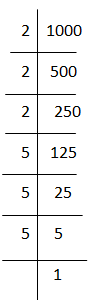
1000 = 2×2×2×5×5×5
By grouping the factors in triplets of equal factors, 1000 = (2×2×2)×(5×5×5)
Here, 1000 can be grouped into triplets of equal factors.
∴ 1000 = (2×5) = 10
Hence, 1000 is the cube of 10.
(iv) 100
Solution:
By resolving 100 into a prime factor,
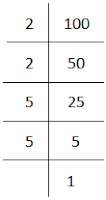
100 = 2×2×5×5
Here, 100 cannot be grouped into triplets of equal factors.
∴ 100 is not a perfect cube.
(v) 46656
Solution:
By resolving 46656 into prime factor,

46656 = 2×2×2×2×2×2×3×3×3×3×3×3
By grouping the factors in triplets of equal factors, 46656 = (2×2×2)×(2×2×2)×(3×3×3)×(3×3×3)
Here, 46656 can be grouped into triplets of equal factors,
∴ 46656 = (2×2×3×3) = 36
Hence, 46656 is the cube of 36.
2. Find the smallest number by which each of the following numbers must be multiplied to obtain a perfect cube.
(i) 243
Solution:
By resolving 243 into a prime factor,
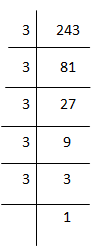
243 = 3×3×3×3×3
By grouping the factors in triplets of equal factors, 243 = (3×3×3)×3×3
Here, 3 cannot be grouped into triplets of equal factors.
∴ We will multiply 243 by 3 to get the perfect cube.
(ii) 256
Solution:
By resolving 256 into a prime factor,

256 = 2×2×2×2×2×2×2×2
By grouping the factors in triplets of equal factors, 256 = (2×2×2)×(2×2×2)×2×2
Here, 2 cannot be grouped into triplets of equal factors.
∴ We will multiply 256 by 2 to get the perfect cube.
(iii) 72
Solution:
By resolving 72 into a prime factor,
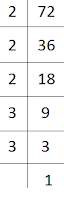
72 = 2×2×2×3×3
By grouping the factors in triplets of equal factors, 72 = (2×2×2)×3×3
Here, 3 cannot be grouped into triplets of equal factors.
∴ We will multiply 72 by 3 to get the perfect cube.
(iv) 675
Solution:
By resolving 675 into a prime factor,

675 = 3×3×3×5×5
By grouping the factors in triplets of equal factors, 675 = (3×3×3)×5×5
Here, 5 cannot be grouped into triplets of equal factors.
∴ We will multiply 675 by 5 to get the perfect cube.
(v) 100
Solution:
By resolving 100 into a prime factor,
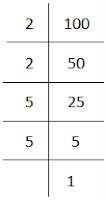
100 = 2×2×5×5
Here, 2 and 5 cannot be grouped into triplets of equal factors.
∴ We will multiply 100 by (2×5) 10 to get the perfect cube.
3. Find the smallest number by which each of the following numbers must be divided to obtain a perfect cube.
(i) 81
Solution:
By resolving 81 into a prime factor,
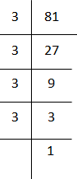
81 = 3×3×3×3
By grouping the factors in triplets of equal factors, 81 = (3×3×3)×3
Here, 3 cannot be grouped into triplets of equal factors.
∴ We will divide 81 by 3 to get the perfect cube.
(ii) 128
Solution:
By resolving 128 into a prime factor,

128 = 2×2×2×2×2×2×2
By grouping the factors in triplets of equal factors, 128 = (2×2×2)×(2×2×2)×2
Here, 2 cannot be grouped into triplets of equal factors.
∴ We will divide 128 by 2 to get the perfect cube.
(iii) 135
Solution:
By resolving 135 into prime factor,

135 = 3×3×3×5
By grouping the factors in triplets of equal factors, 135 = (3×3×3)×5
Here, 5 cannot be grouped into triplets of equal factors.
∴ We will divide 135 by 5 to get the perfect cube.
(iv) 192
Solution:
By resolving 192 into a prime factor,

192 = 2×2×2×2×2×2×3
By grouping the factors in triplets of equal factors, 192 = (2×2×2)×(2×2×2)×3
Here, 3 cannot be grouped into triplets of equal factors.
∴ We will divide 192 by 3 to get the perfect cube.
(v) 704
Solution:
By resolving 704 into a prime factor,

704 = 2×2×2×2×2×2×11
By grouping the factors in triplets of equal factors, 704 = (2×2×2)×(2×2×2)×11
Here, 11 cannot be grouped into triplets of equal factors.
∴ We will divide 704 by 11 to get the perfect cube.
4. Parikshit makes a cuboid of plasticine with sides 5 cm, 2 cm, and 5 cm. How many such cuboids will he need to form a cube?
Solution:
Given the sides of the cube are 5 cm, 2 cm and 5 cm.
∴ Volume of cube = 5×2×5 = 50
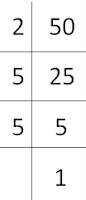
50 = 2×5×5
Here, 2 , 5 and 5 cannot be grouped into triplets of equal factors.
∴ We will multiply 50 by (2×2×5) 20 to get the perfect cube. Hence, 20 cuboids are needed.


.png)

0 Comments